Best Blade to Cut Composite Decking by Tooth Count

Five circular saw blades compared on tooth count, diameter and tooth grind, with a clear winner for miter saw users and a 7-1/4" pick for circular saws.

By Sidney GrayUpdated 15 min read
On this page
- Best blade to cut composite decking at a glance
- How I screened these five blades down
- Does tooth count really decide the cut?
- 1. Revvstark Circular Saw Blade 12 Inch 100T — Best overall
- 2. Bosch DCB1284CD 12 in. 84 Tooth Edge — Best premium
- 3. Norske Tools NCSBP226 7-1/4 inch x 48T — Best for beginners
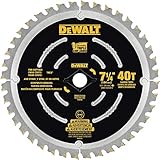
- 4. DEWALT Circular Saw Blade DWA31740 — Best for heavy use
- 5. Echo Corner 7-1/4 Inch Thin Kerf ATB 60T — Best budget pick
- Which blade to cut composite decking fits your saw?
- What melted composite edges are telling you
- What to check before you click buy
- The verdict
- FAQ
The best blade to cut composite decking in this group is the Revvstark 12 In 100T, because 100 teeth on a 12-inch plate crosscut capped composite with the least tearout of anything here. If your saw takes 7-1/4" blades, the Norske NCSBP226 at 48 teeth is the pick instead. Not every buyer needs a dedicated blade at all, though. If you're cutting six boards for a landing, the general-purpose 60T Echo Corner blade handles decking alongside plywood and trim, and you skip the specialist purchase entirely. Big deck, dedicated blade. Small deck, one blade for everything.
Best blade to cut composite decking at a glance
| Pick | Diameter | Teeth | Price |
|---|---|---|---|
Best overall Revvstark Circular Saw Blade 12 Inch 100T |
12 in | 100 | Check Price |
Best premium Bosch DCB1284CD 12 in. 84 Tooth Edge |
12 in | 84 | Check Price |
Best for beginners Norske Tools NCSBP226 7-1/4 inch x 48T |
7-1/4" | 48 | Check Price |
Best for heavy use DEWALT Circular Saw Blade DWA31740 |
7-1/4" | 40 | Check Price |
Best budget pick Echo Corner 7-1/4 Inch Thin Kerf ATB 60T |
7-1/4" | 60 | Check Price |



How I screened these five blades down
I built this shortlist around buyer profiles rather than a scorecard, because the deciding factor in this category isn't quality. It's which saw is sitting in your garage.
Four profiles came out of the listings:
- The miter saw owner. You're crosscutting boards to length on a 12 in miter saw. Two blades here fit that arbor: the Revvstark and the Bosch DCB1284CD.
- The circular saw owner. A 7-1/4" blade with a 5/8" arbor is what you need, and three picks qualify.
- The one-project builder. You want a blade that cuts decking well enough and then goes on to cut fence rails and plywood.
- The repeat user. You're on your third deck this season and want a plate that stays flat.
Two of these blades name composite decking in the product title itself: the Norske NCSBP226 and the DEWALT DWA31740. The Bosch names it too. That narrows things when you want a purpose-built option rather than a general-purpose one.
One note on searching for a blade to cut composite decking: the search results mix genuine decking-specific blades with general fine-finish blades that simply list composite among many materials. Both can work. They are not the same product, and the listing title usually tells you which you're looking at.
Does tooth count really decide the cut?
Tooth count matters, but not on its own. What actually decides the finish is teeth per inch of travel, and that depends on diameter as much as count.
Run the numbers on this set. The Revvstark carries 100 teeth on a 12 in plate. The Bosch carries 84 on the same diameter. On the smaller 7-1/4" bodies, the Echo Corner has 60, the Norske 48, and the DEWALT 40. Now consider circumference: a 12-inch blade travels roughly 1.65 times the distance per rotation that a 7-1/4" blade does. So the 60T Echo Corner is spacing its teeth more tightly along the rim than the 84T Bosch is.
That's the misconception worth clearing up. A 60-tooth 7-1/4" blade is a fine-finish blade. An 84-tooth 12-inch blade is also a fine-finish blade. Comparing the raw counts across diameters tells you nothing useful.
The second variable is tooth grind. Three of the five list a triple chip grind or modified version of it:
- Norske: modified triple chip grind, described as producing "melt free" cutting
- DEWALT: modified triple chip grind tooth design
- Bosch: triple chip grind geometry, which the listing ties to abrasive materials
That flat-topped grind shears the plastic cap rather than lifting it. It's the specification I'd weight above tooth count when choosing a blade to cut composite decking.
1. Revvstark Circular Saw Blade 12 Inch 100T — Best overall
The highest tooth count in this set on the largest diameter, which makes it the cleanest crosscutter here if your miter saw takes 12-inch blades.
Best for: miter saw owners crosscutting deck boards to length Skip it if: your saw takes 7-1/4" blades only
Nothing else here puts 100 teeth on a 12 in plate. That's the whole argument. Composite decking tears out at the cap when teeth are too far apart, and tighter spacing along the rim is the direct fix. The blade weighs 2.49 lb, marginally lighter than the Bosch 12-incher at 2.65 lb, and carries model number RE-012-100.
Revvstark says the body is premium alloy steel with construction-grade tungsten carbide teeth, and describes a laser-cut thin kerf. The listing also claims noise-reducing perforations and thermal expansion grooves, plus an anti-kickback tooth design. Treat all of that as the manufacturer's description rather than measured performance.
Two things separate it from the rest of this set. It's the one buyers here choose most often by a wide margin, and it's the second-cheapest of the five despite the largest diameter and highest count.
The trade-off is specificity. Unlike the Norske, DEWALT and Bosch blades, this one isn't marketed for composite at all. Its listing talks about wood. You're buying it because the geometry suits the job, not because the label says so.
Pros:
- Highest tooth count in this set at 100T
- Largest diameter with the tightest tooth spacing
- The one buyers choose most often here
- Second-cheapest of the five picks
- Lighter than the other 12 in blade at 2.49 lb
Cons:
- Marketed for wood, not composite specifically
- No triple chip grind stated in the listing
- Won't fit a 7-1/4" circular saw
- No published warranty
- Only one seller lists it
2. Bosch DCB1284CD 12 in. 84 Tooth Edge — Best premium
The only blade here that pairs a 12 in miter saw diameter with a stated triple chip grind and composite decking in its title.

Best for: pros running a 12 in miter saw through long board runs Skip it if: this is a one-weekend deck project
The DCB1284CD is the most expensive pick here, and the specification sheet explains why. Bosch lists triple chip grind tooth geometry described as designed for highly abrasive materials, which is exactly what a mineral-filled composite board is. It also lists what it calls brute carbide, an upgraded C3/C4 micrograin formulation aimed at impact resistance.
At 2.65 lb it's the heaviest blade in this comparison, and the listing attributes that to an extra-hard steel body meant to resist bending and deflection. On a miter saw that matters for square cuts across a 5-1/2" board. Bosch also states the blade is optimized for 12 in. miter saws specifically, and mentions a thinner kerf for faster cuts and less waste.
It's one of only two picks with any warranty entry at all, though the entry just points to the manufacturer's website rather than stating a term.
Against the Revvstark it gives up 16 teeth and costs more. What it buys instead is the composite-specific tooth grind and a name you'll find on a jobsite. For a single deck, that gap is hard to justify.
Pros:
- Triple chip grind rated for abrasive materials
- Purpose-built for composite decking
- Heaviest, stiffest body here at 2.65 lb
- Optimized for 12 in miter saws per the listing
- C3/C4 micrograin carbide formulation claimed
Cons:
- The most expensive pick in this set
- 16 fewer teeth than the Revvstark at the same diameter
- Warranty entry gives no actual term
- Sells slower than the Revvstark here
- Bulkiest package at 13.5 x 15.5 in
3. Norske Tools NCSBP226 7-1/4 inch x 48T — Best for beginners
The clearest first buy for a circular saw owner: composite decking is in the product title, and the tooth grind is spelled out.

Best for: first-time deck builders using a standard circular saw Skip it if: you want a stated guarantee
If you own a standard circular saw and you've never cut composite before, this is the least confusing choice on the page. The full title names composite decking, Trex and bamboo decking directly, and the listing adds cellular PVC. No guessing whether the geometry suits the material.
The specification I'd point to first is the modified triple chip grind, which Norske ties to "clean, cool and melt free" cutting. Melting is the failure mode that ruins composite edges, so a blade that names the problem is worth a look. Norske also lists a non-stick coating meant to reduce drag and resist gumming, and an ultra-thin kerf. The plate is Japanese steel with a 5/8" bore and a diamond knockout for worm drive saws.
At 8 oz it's light. The disc measures 7.25 x 7.25 x 0.13 in.
The honest weakness is the warranty field, which reads "no guarantee." That's rare to see stated outright. And 48 teeth is the second-lowest count here, so the Echo Corner's 60T will leave a slightly finer edge on the same saw.
Pros:
- Composite decking and cellular PVC named on the label
- Modified triple chip grind for melt-free cutting per Norske
- Non-stick coating against gumming and heat
- Diamond knockout arbor suits worm drive saws
- Light at 8 oz
Cons:
- Warranty field states no guarantee
- 48T is fewer teeth than the Echo Corner's 60T
- Slowest seller of the five here
- Only one seller lists it
4. DEWALT Circular Saw Blade DWA31740 — Best for heavy use
A composite-specific 7-1/4" blade from the most recognised brand here, though it runs the lowest tooth count of the five.

Best for: crews wanting a known brand in a 7-1/4" size Skip it if: you want the finest possible edge
The DWA31740 is DEWALT's composite decking blade, and it reads as the working man's version of that idea. Diameter is 7-1/4" with a 5/8" arbor, so it drops into almost any circular saw. The listing states a modified triple chip grind tooth design and a laser-cut plate design described as delivering cool, metal-free cuts.
Forty teeth is the lowest count in this comparison. That's a deliberate choice on DEWALT's part rather than an oversight: fewer, larger teeth clear chips faster and build less heat, which is why fewer teeth sometimes finishes composite better than more. Composite doesn't splinter the way solid wood does. It smears when it gets hot. A blade that stays cool through a long rip has a real argument.
It's the second-most expensive pick here and sits in the premium tier. Package dimensions are 8.75 x 0.5 x 9.75 in.
What it gives up is fine-cut capability. If you're mitering picture-frame borders where the cut edge stays visible, the 60T Echo Corner or the 12-inch blades will look better. This one is for volume.
Pros:
- Composite decking stated in the product title
- Modified triple chip grind tooth design
- Low tooth count clears chips and runs cooler
- Standard 7-1/4" with 5/8" arbor fits most saws
- Laser-cut plate for metal-free cuts per DEWALT
Cons:
- Lowest tooth count of the five at 40T
- Premium price position for the fewest teeth here
- No weight or warranty published in the listing
- Coarsest finish of the 7-1/4" picks
5. Echo Corner 7-1/4 Inch Thin Kerf ATB 60T — Best budget pick
The cheapest pick here and the most versatile, with 60 teeth and composite decking listed among a long roster of materials.

Best for: mixed cutting where decking is one job among many Skip it if: composite is the only material you'll cut
This is the cheapest of the five and the one I'd hand to someone building a small landing rather than a full deck. Sixty teeth on a 7-1/4" plate is the highest count of the three small blades, which means the tightest tooth spacing at that diameter. The kerf is stated at 0.086" and the plate spins to 8,500 max RPM with a 5/8" arbor and a diamond knockout for worm drive saws.
Echo Corner lists composite decking alongside plywood, plastic, veneer, laminate, lumber and framing work. That breadth is the point. One blade, several jobs, and it stays on the saw when the deck is done.
Supporting claims include laser-cut stabilizer vents for less noise and vibration, high-density tungsten carbide teeth, and a non-stick coating against friction, gumming and rust. At 0.71 lb it's the lightest blade here by a clear margin, at 0.1 x 7.25 x 7.25 in.
The trade-off is focus. It's an ATB grind, not the triple chip the Norske, DEWALT and Bosch blades specify, and ATB teeth are more prone to smearing plastic under heat. No diameter is listed in the specification block either, only in the title.
Pros:
- Cheapest pick in this comparison
- Highest tooth count among the 7-1/4" blades at 60T
- Cuts plywood, laminate and lumber as well as composite
- Lightest blade here at 0.71 lb
- Kerf and max RPM both published
Cons:
- ATB grind, not the triple chip the specialists use
- Not marketed for composite specifically
- No warranty listed
- Diameter missing from the specification block
- Only one seller lists it
Which blade to cut composite decking fits your saw?
This is the question that decides the purchase, and it comes before any discussion of teeth or grind. Check the blade currently on your saw. The diameter is stamped on the plate.
- 12-inch miter saw: Revvstark 100T or Bosch DCB1284CD. Nothing else here fits.
- 7-1/4" circular saw or worm drive: Norske 48T, DEWALT DWA31740, or Echo Corner 60T. All three take a 5/8" arbor.
- 10-inch table saw or miter saw: none of these five fits. Don't force it.
Two of the three small blades list a diamond knockout arbor: the Norske and the Echo Corner. That's the insert you punch out to fit a worm drive saw's diamond-shaped shaft. If you're running a Skilsaw-style worm drive, those two are your options and the DEWALT listing doesn't mention it.
One more constraint worth checking is thickness. The Norske disc is 0.13 in and the Echo Corner 0.1 in, both thin-kerf. A thin blade removes less material and loads the motor less, which helps on a cordless saw with a fading battery. It also flexes more on a deep bevel cut.
What melted composite edges are telling you
Composite decking is wood flour and plastic. The plastic is the problem. It doesn't chip out like oak, it softens and re-fuses behind the blade, leaving a fuzzy grey ridge along the cut. That ridge is why a good blade to cut composite decking matters more than it would for pressure-treated pine.
Three things cause it:
- Heat from too many teeth. More teeth means more friction and slower chip clearance. This is why DEWALT's 40T blade exists.
- Wrong tooth grind. An ATB tooth lifts and slices. A triple chip tooth shears flat. Flat wins on plastic.
- Feed rate. Pushing slowly keeps the blade in one spot longer and dumps heat into the board.
Note the tension between points 1 and 2. Fewer teeth run cooler, more teeth cut finer, and the triple chip grind is how manufacturers try to have both. The Bosch and Norske listings both name that grind, and Norske goes further and uses the word "melt" directly.
The practical answer for most people: pick the grind first, then the highest tooth count you can get with it, then feed the saw at a steady walking pace and don't stop mid-board.
What to check before you click buy
Four listing details worth reading closely, because they're where these five blades genuinely differ.
Arbor size. All the 7-1/4" picks here list 5/8". Confirm your saw matches.
Stated tooth grind. Triple chip on the Bosch, Norske and DEWALT. ATB on the Echo Corner. The Revvstark listing doesn't specify, which is its main gap on paper.
Kerf. Only the Echo Corner publishes a figure, 0.086". Others describe a thin kerf without a number. A thinner kerf means less waste and less motor load.
Warranty. This is thin across the board. Norske states no guarantee. Bosch points to the manufacturer's website. The other three publish nothing. If a warranty is a dealbreaker, none of these five will satisfy you, and that's worth knowing before you shop rather than after.
Also worth noting: every one of these five is stocked by a single seller. That's normal for blades and not a mark against any of them, but it means the listing you see is the only version available.
The verdict
The Revvstark 12 In 100T is the best blade to cut composite decking here, and the reason is arithmetic. One hundred teeth on a 12 in plate gives the tightest tooth spacing in this comparison, which is the specification most directly tied to a clean composite edge. It's also the second-cheapest pick and the one buyers here choose most often by a very wide margin.
Two conditions flip that.
If your saw takes 7-1/4" blades, the Revvstark is irrelevant and the Norske NCSBP226 becomes the pick. It names composite decking, Trex and cellular PVC on the label, specifies a modified triple chip grind for melt-free cutting, and adds a non-stick coating and a diamond knockout arbor. That's more composite-specific engineering than anything else at that diameter.
If you're a pro running board after board on a miter saw, the Bosch DCB1284CD earns the extra outlay. Its exact advantage over the Revvstark is the stated triple chip grind rated for abrasive materials, plus the heaviest, stiffest body here at 2.65 lb for deflection-free cuts. You trade 16 teeth for a tooth geometry built specifically for what composite does to carbide.
FAQ
Is a dedicated blade to cut composite decking worth buying?
A dedicated blade to cut composite decking is worth it once you're past roughly a dozen boards. Below that, a fine-finish blade like the 60T Echo Corner handles the job and then cuts your framing, plywood and trim afterward. For a full deck, the melt-free edge from a triple chip grind blade like the Norske saves you hours of sanding.
What does more money buy in this category?
More money buys tooth geometry and plate stiffness, not tooth count. The premium Bosch DCB1284CD has 16 fewer teeth than the cheaper Revvstark. What it adds is a triple chip grind rated for abrasive materials, a C3/C4 micrograin carbide formulation, and the heaviest body here at 2.65 lb for resistance to bending. The cheapest pick, the Echo Corner, uses an ATB grind instead.
Will a 7-1/4 inch blade fit my worm drive saw?
A 7-1/4 inch blade will fit a worm drive saw only if it has a diamond knockout arbor, since worm drives use a diamond-shaped shaft rather than a round one. Two picks here list that feature: the Norske NCSBP226 and the Echo Corner 60T. The DEWALT DWA31740 lists a 5/8" arbor without mentioning a knockout, so verify before ordering.
Revvstark 100T or Bosch DCB1284CD for a miter saw?
Between the Revvstark 100T and the Bosch DCB1284CD, both fit a 12-inch miter saw and the choice comes down to volume. The Revvstark gives you 100 teeth for a finer cut at a lower price. The Bosch gives you a stated triple chip grind for abrasive material and a stiffer 2.65 lb body. Occasional use, Revvstark. Repeat decks, Bosch.
What's the most common mistake cutting composite decking?
The most common mistake cutting composite is feeding too slowly. Dwelling in one spot heats the plastic until it softens and re-fuses behind the teeth, leaving a fuzzy grey ridge no blade can prevent. Keep a steady pace through the board and don't pause mid-cut. Blade choice helps, but feed rate causes more ruined edges than tooth count does.
Start by reading the diameter stamped on the blade already mounted to your saw, because that single number eliminates three of these five picks before you compare anything else. If it says 12, the Revvstark 100T is the default and the reason is simple: it puts more teeth in contact with the board per revolution than anything else here, at a price below three of the four alternatives. If it says 7-1/4, go to the Norske and take the triple chip grind. And if composite is a small part of a bigger build, the Echo Corner keeps one blade on the saw all weekend.