Best Coolant Stop Leak: K-Seal ST5501 Leads
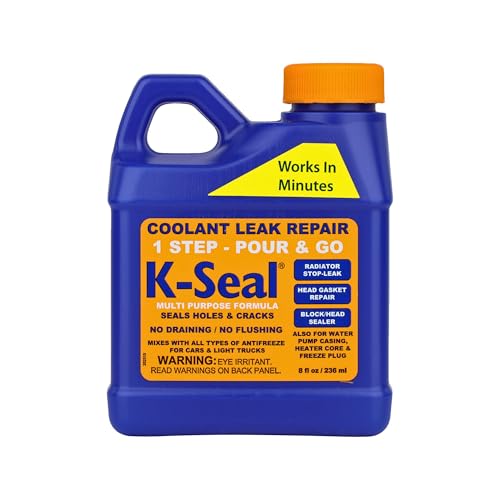
A spec-first comparison of five coolant stop leak products, ranked by what actually matters: sealing chemistry, dose size, and engine size fit.

By Sidney GrayUpdated 15 min read
On this page
- Best coolant stop leak at a glance
- How I narrowed the field to these five
- 1. K-Seal ST5501 Multi-Purpose One Step Coolant Leak Repair — Best overall
- 2. K-Seal ST5516HD Heavy-Duty Coolant Leak Repair — Best premium
- 3. Bar's Leaks Cooling System Radiator Stop Leak 16.9 oz — Best minimal setup
- 4. Bar's Leaks 1109 Liquid Copper Block Seal — Best budget pick
- 5. Liqui Moly Radiator Stop Leak — Best for pros
- What actually decides a coolant stop leak?
- 8 oz or 16 oz: which bottle size fits your engine?
- What the listings do not tell you about permanent repair
- When you should skip stop leak entirely
- The verdict
- FAQ
The best coolant stop leak for most drivers is the K-Seal ST5501 Multi-Purpose One Step Coolant Leak Repair, an 8 oz bottle that mixes with any antifreeze and, per K-Seal, seals a leak within 1-3 minutes with no flushing. For heavy-duty trucks and larger engines, step up to the 16 oz K-Seal ST5516HD instead. The wrong choice here means a fresh coolant plume on your driveway a week after you thought the job was done, so match the dose and chemistry to the leak before you pour anything in.
Best coolant stop leak at a glance
| Pick | Size | Formula type | Price |
|---|---|---|---|
Best overall K-Seal ST5501 |
8 oz | Multi-purpose, all antifreeze | Check Price |
Best premium K-Seal ST5516HD |
16 oz | Heavy-duty multi-purpose | Check Price |
Best minimal setup Bar's Leaks Radiator Stop Leak |
16.9 oz | Liquid aluminum | Check Price |
Best budget pick Bar's Leaks 1109 Liquid Copper |
18 oz | Sodium silicate liquid glass | Check Price |
Best for pros Liqui Moly Radiator Stop Leak |
0.25 l | Cooler additive | Check Price |



How I narrowed the field to these five
I started with the crowded shelf of coolant stop leak products on Amazon and screened for three things: a stated compatibility with all antifreeze colours, a published dose size in ounces or millilitres, and a category listing under cooling additives or radiator sealants rather than a general "car care" bin. That cut the field fast.
Three disqualifiers did most of the work:
- Products that named a single coolant colour and warned against mixing. A cooling system today may carry green, orange, pink, blue or yellow fluid, and a sealant that fights one of them is a callback in a can.
- Products with no dose figure on the listing. If the label will not tell you how many ounces are in the bottle, you cannot calculate whether it suits your cooling system capacity.
- Products that demanded a full drain and refill before use. That defeats the point of a pour-in fix.
What survived is five products with real specification sheets. Two K-Seal variants, two Bar's Leaks variants and one Liqui Moly. Each names its dose in ounces or millilitres, each states an antifreeze compatibility, and each sits in a proper cooling or sealant category on Amazon. That is the pool I compared spec by spec below.
1. K-Seal ST5501 Multi-Purpose One Step Coolant Leak Repair — Best overall
The K-Seal ST5501 wins because it is the only pick in this set that pairs universal antifreeze compatibility with a small enough dose to suit a normal passenger car cooling system.
Best for: a weeping radiator or heater core on a passenger car Skip it if: you drive a heavy-duty truck or a large diesel
At 8 oz and 0.57 lb, this is the smallest bottle in the set. That matters because coolant stop leak is dose-sensitive: too little and the leak keeps weeping, too much and you risk clogging a heater core or thermostat. Most passenger cars carry between 8 and 14 quarts of coolant, and an 8 oz dose sits right in the range K-Seal targets. The listing says the formula seeks out each hole and crack, sealing them without adverse impact on cooling efficiency, and that it works with all types of antifreeze coolant in cars and light trucks up to 12 cylinders. K-Seal states the seal forms within 1-3 minutes and that no flushing is required. The compact 4.5 x 3.5 x 1.5 in bottle also fits in a glovebox, which is where a stop leak actually earns its keep. Against the 16 oz variants in this set, it gives up capacity for fit; against the Bar's Leaks options, it gives up the chunkier chemistry in exchange for cleaner mixing across coolant colours. The one buyers choose most often here, and by a wide margin over the rest of this set.
Pros:
- Small 8 oz dose suits typical passenger car cooling systems
- Compatible with all antifreeze coolant types
- 1-3 minute seal claim per manufacturer
- No flushing or draining required
- Compact 4.5 x 3.5 x 1.5 in bottle for glovebox storage
Cons:
- 8 oz is undersized for heavy-duty engines
- Mid-range price position in this set
- Manufacturer warns about over-pressurised systems producing bubbles
2. K-Seal ST5516HD Heavy-Duty Coolant Leak Repair — Best premium
The ST5516HD is the ST5501's chemistry doubled up for engines that hold too much coolant for an 8 oz shot to matter.

Best for: commercial trucks, RVs and large-displacement engines Skip it if: your cooling system holds under two gallons
This is the most expensive pick here, and the reason is dose. The 16 oz bottle measures 1.9 x 5.9 x 4.1 in, and K-Seal says it is engineered for large engines and industrial use, including commercial and agricultural vehicles. The multi-purpose formula is the same: seal leaks in the radiator, head gasket, freeze plugs, block, heater matrix and water pump, without any adverse impact on cooling efficiency, and compatible with all types of antifreeze coolant. What you are buying with the HD is not a smarter chemistry, it is enough of the same chemistry to work in a cooling system that holds four or five gallons of fluid. The listing does not publish a warranty statement or a weight figure the way the 8 oz version does, and the packaging carries the same over-pressurisation warning. Against the ST5501, it is the same product at double the size for double the engine. Against the Bar's Leaks 16.9 oz and 18 oz options, its edge is the all-coolant compatibility that comes stock on both K-Seal bottles. The slowest seller of the two K-Seal variants, but that reflects fleet-scale demand, not the product's fit for the job.
Pros:
- 16 oz dose sized for heavy-duty and industrial engines
- Same all-antifreeze compatibility as the 8 oz K-Seal
- Purpose-built for commercial and agricultural vehicles
- Pour and go, no flushing required
Cons:
- The most expensive pick in this set
- Overkill for a normal passenger car
- Fewer published specs than the 8 oz version
3. Bar's Leaks Cooling System Radiator Stop Leak 16.9 oz — Best minimal setup
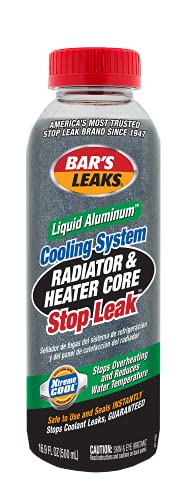
Bar's Leaks 1186 is a straight liquid aluminum sealant with a single job: seal a radiator or heater core leak with the smallest possible fuss.
Best for: an older radiator with pinhole leaks and a mild overheating trend Skip it if: the leak is at a head gasket
The 16.9 oz bottle weighs 1.2 lb and measures 6.6 x 1.8 x 3 in, so it pours cleanly into a filler neck without a funnel. Bar's Leaks states that its Liquid Aluminum Stop Leak seals radiator leaks, seals freeze plug leaks, repairs gasket leaks and heater core leaks, and lowers water temperature. That last claim is worth noting on its own: it targets both the leak and the mild overheating that often comes with it. The model dates from 2012 and the listing states no warranty. Only one seller lists this variant, which limits your options if the first is out of stock. Against the K-Seal picks, the trade-off is the coolant colour question: Bar's Leaks does not make the same broad "works with every antifreeze" claim as K-Seal, so if you have recently topped up with an unfamiliar colour, the safer bet sits higher on this list. Against the 1109 Liquid Copper below, this is the tamer chemistry: better for a weep at the core, worse for a suspected block crack.
Pros:
- 16.9 oz dose fits a full-size cooling system in one bottle
- Claims to lower water temperature alongside sealing
- Narrow 1.8 in bottle pours cleanly into a filler neck
- Targets radiator, freeze plug, gasket and heater core
Cons:
- No warranty stated on the listing
- Only one seller lists it
- Less clearly universal on coolant colour than the K-Seal picks
4. Bar's Leaks 1109 Liquid Copper Block Seal — Best budget pick
The 1109 is the heaviest chemistry in this set, aimed squarely at block and head gasket leaks, and it is the cheapest of the five.

Best for: a suspected block or head gasket leak on an out-of-warranty vehicle Skip it if: you only have a slow weep at a hose clamp
At 18 oz and 1.13 lb, this is the largest single-bottle dose in the group. Bar's Leaks describes the formula as a sodium silicate liquid glass with fibre additives that lock together with liquid to increase strength and promote a permanent seal. The listing states the product penetrates large and small leaks in plastic, aluminum and cast iron heads, blocks, intake manifold and gaskets, and freeze plugs, and it works with all types of traditional or extended life coolant, including yellow, orange, pink, red, blue, purple and green silicate-based and non-silicate-based OAT and HOAT 50-50 mix antifreeze. That is the broadest coolant compatibility statement on any listing here. Bar's Leaks says one bottle permanently repairs coolant loss on cars, trucks, vans, SUVs and RVs. The trade-off is chemistry strength: sodium silicate is aggressive enough to close a block crack, and equally capable of settling in a heater core if the leak was actually minor. Match the tool to the job. The cheapest of the five and the only pick in this set explicitly aimed at block seal duty.
Pros:
- The cheapest of the five picks
- 18 oz dose is the largest single-bottle here
- Broadest published coolant colour compatibility
- Explicitly rated for block and head gasket leaks
Cons:
- Aggressive chemistry can clog a healthy heater core
- No warranty stated on the listing
- Only one seller lists it
5. Liqui Moly Radiator Stop Leak — Best for pros
Liqui Moly's 250 ml bottle is the smallest and most precisely dosed option in this set, aimed at technicians who want to control exactly how much goes in.

Best for: European cars where a smaller, precise dose matters Skip it if: you need enough product for a full-size pickup cooling system
At 0.25 l, the Liqui Moly bottle is smaller than the K-Seal ST5501's 8 oz. It measures 2.12 x 6.45 x 2.12 in and carries model number 20132, released in 2017. Liqui Moly states that the additive completely seals leaks immediately with ease, that it secures the combustion chamber from damages caused by coolant admission, and that it suits all cooling water and heating systems with and without water filters. The metric dose is the tell: this product is targeted at European cars with smaller cooling capacities, where an oversized dose of a heavier North American formulation can do more harm than a slow leak. It is the second-most-expensive pick here, and the least popular by turnover in this set, which is a fair reflection of a narrow use case rather than a weak product. Against the K-Seal ST5501, the trade-off is capacity and price: you pay a premium for a smaller, more precisely dosed additive from a brand that trades on OEM-adjacent formulation.
Pros:
- Metric 250 ml dose suits smaller European cooling systems
- Claims to protect the combustion chamber from coolant damage
- Works with cooling and heating systems, with or without water filters
- Warranty listed on the product page
Cons:
- Premium price for a small dose
- The slowest seller of the five picks here
- Not enough product for a full-size pickup
What actually decides a coolant stop leak?
Most guides compare bottle size and price. That is not what decides it.
The real question is a match between three variables: the coolant volume in your engine, the coolant colour and chemistry already in the system, and the location of the leak. Get those three right and any of the picks above will hold. Get them wrong and even the most expensive bottle in this set becomes a driveway stain.
- Coolant volume. A typical passenger car holds 8 to 14 quarts. Heavy-duty trucks and RVs can hold three to five times that. The 8 oz K-Seal ST5501 is dosed for the first group; the 16 oz K-Seal ST5516HD is dosed for the second.
- Coolant chemistry. OAT, HOAT and traditional silicate coolants do not always play nicely with additives. K-Seal states compatibility with all antifreeze types on both its bottles. Bar's Leaks 1109 lists the widest colour set on its label: yellow, orange, pink, red, blue, purple and green.
- Leak location. A weep at the radiator core wants a mild sealant. A crack in the block wants sodium silicate liquid glass. The Bar's Leaks 1109 targets the second explicitly.
If a shop only stocked one bottle for general use, the 8 oz K-Seal is the safest default, because it matches the volume of the most common car on the road and does not force a coolant colour decision on the driver.
8 oz or 16 oz: which bottle size fits your engine?
Dose is the specification most buyers get wrong.
For a car with a 2 to 4 litre engine and a stock radiator, the 8 oz K-Seal ST5501 is the right size. The 4.5 x 3.5 x 1.5 in bottle empties fully into the coolant reservoir and mixes without over-treating.
For a pickup with a large V8, a diesel, or anything commercial, step up. The 16 oz K-Seal ST5516HD, the 16.9 oz Bar's Leaks 1186 and the 18 oz Bar's Leaks 1109 all sit in the right dose range. The K-Seal HD keeps the all-coolant compatibility of its smaller sibling. The Bar's Leaks 1109 brings the broadest coolant colour statement in the set and the strongest chemistry for a block or head gasket leak.
For a European hatchback with a small cooling system, the Liqui Moly 250 ml is the best physical fit. It is closer in dose to what a Continental workshop would reach for, and its listing addresses combustion chamber protection directly.
The trick is to read your owner's manual for total coolant capacity before you buy anything. If you cannot find the figure, err on the side of the smaller bottle: under-dosing rarely damages a cooling system, over-dosing can.
What the listings do not tell you about permanent repair
Every bottle here uses the word "seal" and one uses the word "permanent". Read those words carefully.
Stop leak products are excellent at closing pinholes, hairline cracks and weeping gaskets. They are not a substitute for a new radiator, a new head gasket or a proper block repair. What they buy you is time, sometimes a lot of it: enough time to plan a repair, to drive a car until you can afford a workshop bill, or to keep an older vehicle alive that is not worth a full cooling overhaul.
Three things the listings tend not to spell out:
- Over-pressurised systems. K-Seal's own listing warns that if you see bubbles at the radiator or reservoir after treatment, the system may be over-pressurised, which usually points to a head gasket problem beyond a simple seal. That is a signal to stop and get the car looked at, not to add a second bottle.
- Heater core sensitivity. Aggressive sealants can lodge in the tiny tubes of a heater core. If your only leak is a weep, use the milder chemistry.
- Repeat dosing. These products are dose-limited by design. Adding more than the label recommends will not fix a leak the first bottle did not fix. It will build up residue.
If a stop leak does not hold within a few driving cycles, the underlying damage is beyond what a pour-in additive can reach.
When you should skip stop leak entirely
Stop leak is a tool, not a cure. Skip it in these cases:
- Your car is under warranty. Any additive can void a cooling system warranty. Take it to the dealer.
- The leak is at a visible hose or clamp. A new hose costs less than a bottle of sealant and lasts longer.
- You are losing more than a small amount of coolant per week. A large leak needs a mechanical fix, not a chemical one.
- The engine has been overheating badly. Sealant does not undo warped heads or damaged bearings.
- You have already tried one full dose and the leak persists. Doubling up rarely works and can clog healthy parts of the system.
Stop leak earns its place on older vehicles, on out-of-warranty engines with slow weeps, and as a roadside get-you-home fix for a sudden pinhole. Outside those uses, spend the money on a proper repair instead.
The verdict
The K-Seal ST5501 is the best coolant stop leak for the vehicle most people actually drive. Its 8 oz dose matches a typical passenger car cooling system, its formula mixes with every antifreeze colour on the market, K-Seal claims a seal within 1-3 minutes, and its compact 4.5 x 3.5 x 1.5 in bottle earns a spot in the glovebox for the day you need it.
Two conditions flip the recommendation. If you drive a heavy-duty truck, an RV or anything with a cooling system that holds more than two gallons, buy the K-Seal ST5516HD instead: same chemistry, double the dose. If you have a confirmed or suspected block or head gasket leak, the Bar's Leaks 1109 Liquid Copper Block Seal is the right tool, because sodium silicate liquid glass is what closes cracks in cast iron and aluminum blocks, and the 1109 listing states the broadest coolant colour compatibility of any pick here.
The 8 oz K-Seal wins on fit, not on chemistry firepower. It is the pick that suits the most common leak, in the most common car, without asking the driver to decide what colour their coolant is.
FAQ
Does coolant stop leak actually work?
Coolant stop leak does work on the leaks it is designed for: pinholes, hairline cracks, weeping gaskets and small freeze plug leaks. K-Seal states its ST5501 seals within 1-3 minutes on those failures. It will not close a split hose, a cracked plastic reservoir or a badly warped head gasket. Treat it as a fix for slow leaks and a get-you-home tool for sudden ones, not a substitute for mechanical repair.
Is coolant stop leak worth it for an older car?
Coolant stop leak is worth it for an older car whose repair bill would exceed its market value. An 8 oz bottle of K-Seal ST5501 or an 18 oz bottle of Bar's Leaks 1109 costs a fraction of a new radiator or a head gasket job. On a daily driver with 150,000 miles and a slow weep, the additive can buy you another season of use. On a low-mileage car still under warranty, do not use it: take the car to the dealer instead.
K-Seal ST5501 or Bar's Leaks 1109: which should I buy?
K-Seal ST5501 or Bar's Leaks 1109 depends on the leak. Pick the 8 oz K-Seal for a radiator, heater core or freeze plug weep on a normal passenger car, because its dose suits typical coolant volumes and its formula works with any antifreeze. Pick the 18 oz Bar's Leaks 1109 for a suspected block or head gasket leak, because its sodium silicate liquid glass chemistry is engineered to close cracks in cast iron and aluminum.
Will coolant stop leak clog my heater core?
Coolant stop leak can clog a heater core if the dose is too aggressive for the leak. Sodium silicate formulations like the Bar's Leaks 1109 are strong enough to close block cracks and equally capable of settling in the narrow tubes of a heater core. Match the chemistry to the leak: milder additives like the K-Seal 8 oz for small weeps, heavier formulations only for confirmed block or gasket damage. Never exceed the label dose.
Is any coolant stop leak safe for all antifreeze colours?
Any coolant stop leak safe for all antifreeze colours needs to say so on the label. Both K-Seal bottles state compatibility with all types of antifreeze coolant. Bar's Leaks 1109 lists yellow, orange, pink, red, blue, purple and green, including OAT and HOAT 50-50 mix. If you do not know what colour is currently in your system, or you have topped up from a different bottle, the K-Seal ST5501 is the safest default.
Before you order, walk out to the car, open the hood and check three things: the coolant level in the reservoir, the colour of the fluid, and any wet spots on the ground below the engine. That five-minute check tells you which of the picks above is the right buy, and it saves you from ordering a heavy-duty dose for a light-duty leak. For most drivers, the answer will land on the 8 oz K-Seal ST5501: it is the smallest sensible dose that mixes with every coolant colour, it seals within a few minutes per the manufacturer, and it lives in the glovebox until the day the temperature gauge starts creeping up.