Best Manual Post Hole Digger for Steep Hills

Seven manual post hole diggers compared for slope work, with the deciding specs on blade, handle and reach called out for each pick.

By Sidney GrayUpdated 17 min read
On this page
- Best manual post hole digger for steep hills at a glance
- How I narrowed seven listings to a ranked set
- Why steep ground changes the tool you need
- 1. THANKSFINE 57-Inch Manual Fence Digger — Best overall
- 2. LLARGUEST 54-Inch Heavy Duty — Best for pros
- 3. THANKSFINE Stainless Steel Handle — Most versatile
- 4. YEELOR Integrated Carbon Steel Blade — Runner-up
- 5. CKG 57-Inch Fiberglass Handle — Best minimal setup
- 6. Oscorna 8-Inch Hand Drill Auger — Best upgrade
- 7. VEVOR 57.5-Inch Fiberglass — Best premium
- Clamshell or auger: which suits a slope?
- What the listings do not tell you about hillside digging
- How to judge a post hole digger you did not see here
- The verdict
- FAQ
The best manual post hole digger for steep hills is the THANKSFINE 57-Inch Manual Fence Digger, because its 57-inch reach and carbon steel blades let you plant your uphill foot and still cut a clean hole below the downhill one, at 7.5 lb of swing weight. The LLARGUEST 54-Inch Heavy Duty is the pick if you want a detachable shaft that rides in a truck between jobs, at a shorter 54 inches. A note first: "steep hills" is not a spec any of these listings publish, so treat every recommendation below as a judgement about reach, weight and blade, not a slope rating.
Best manual post hole digger for steep hills at a glance
| Pick | Length | Weight | Price |
|---|---|---|---|
Best overall THANKSFINE 57-Inch Manual Fence Digger |
62 in overall 57 in handle |
7.5 lb | Check Price |
Best for pros LLARGUEST 54-Inch Heavy Duty |
54 in | not listed | Check Price |
Most versatile THANKSFINE Stainless Steel Handle |
62 in overall 57 in handle |
not listed | Check Price |
Runner-up YEELOR Integrated Carbon Steel Blade |
55.1 in | 7.9 lb | Check Price |
Best minimal setup CKG 57-Inch Fiberglass Handle |
57 in | 8 lb | Check Price |
Best upgrade Oscorna 8-Inch Hand Drill Auger |
44.5 in 8 in bit |
not listed | Check Price |
Best premium VEVOR 57.5-Inch Fiberglass |
57.5 in | 10.1 lb | Check Price |


How I narrowed seven listings to a ranked set
Post hole diggers look almost identical on a listing page. Two wooden or fibreglass handles, two curved blades, a length in inches. The differences that matter on a slope hide in specs most shoppers scroll past.
I cut anything with no published blade material, since a hillside is the worst place to discover a soft head. Then I cut anything without a stated handle length, because reach is what lets you keep your body over the top of the hole on uneven ground. What survived was seven diggers, six of them clamshell-style and one screw-in auger for contrast.
Three reasons I disqualified other listings while shortlisting:
- No usable spec table beyond a colour, which leaves the buyer guessing about weight and shaft length.
- Handle length under 48 inches, which forces a stooped stance the moment the ground tilts.
- Blade material described only as "metal", with no mention of carbon steel, 50Mn steel or a comparable grade.
That gave me a set where every remaining pick states either a length, a blade grade, or both, and where I could compare the picks against each other on the specs that actually decide slope work. Every claim you read below is either a specification pulled from one of those seven listings or a feature bullet, attributed to the maker.
Why steep ground changes the tool you need
Flat-ground digging rewards a heavy tool, because gravity does part of the cut for you. Slope digging punishes weight, because you spend as much energy staying upright as you do moving soil. On a hillside you are also standing at two different heights on the two handles, which means a longer shaft matters more than a heavier head.
Three specifications carry most of the weight of the decision:
- Overall length. Longer reach means you can plant your uphill foot further from the hole and keep your spine over the tool. The set here runs from 44.5 inches on the Oscorna auger to 62 inches on both THANKSFINE picks.
- Tool weight. Lighter is better on slope, up to the point that the blade will not bite. The set runs from 7.5 lb on the THANKSFINE 57-Inch to 10.1 lb on the VEVOR. That is a 2.6 lb swing every time you lift the tool, which adds up fast over a fence line.
- Blade material. Carbon steel and 50Mn steel are hard enough to prise against a rock on the downhill side without deforming. A soft blade rolls and skates on angled ground.
Handle material matters too. Fibreglass, on the CKG and VEVOR picks, resists the twist you put through the shaft when you tip a load out of a hole cut into a slope.
1. THANKSFINE 57-Inch Manual Fence Digger — Best overall
A 7.5 lb, 62-inch clamshell with carbon steel blades: the lightest full-size pick in the set, and the one I would carry up a hill first.
Best for: hillside fence lines where you need a sharp blade and a familiar clamshell stance Skip it if: you want a screw-in auger for soft soil
The reason this leads the roundup for slope work is a simple pairing: 62 inches of overall length with a listed 7.5 lb tool weight. Every other full-size clamshell here is heavier, and none of the longer picks weigh less. On a hill, that pairing lets you stand tall on the uphill foot, drop the head to the downhill soil, and still swing without your shoulders taking the whole load. The blades are described by THANKSFINE as pre-sharpened, curved carbon steel with powder coating, and the maker says reinforced connection points let the digger prise against rocks and roots without cracking. Adjustable handle positions, per the listing, help fit users of different heights, which matters when one hand is a foot above the other on a slope. Assembly, according to the same listing, takes under three minutes and requires no tools. The trade-off against the others in this set is that a clamshell needs open space either side of the hole, and on a steep bank the downhill handle will collide with the ground earlier than it would on level dirt.
Pros:
- Lightest full-size digger here at 7.5 lb
- Longest handle in the set at 62 in overall
- Carbon steel blades with powder coating
- Adjustable handle positions per listing
- Cheapest of the seven
Cons:
- Clamshell action needs clearance either side
- Steel handles transmit shock in cold weather
- Only one seller lists it
2. LLARGUEST 54-Inch Heavy Duty — Best for pros
A 54-inch metal digger with a detachable shaft the maker says packs into a car, so it rides between jobs.
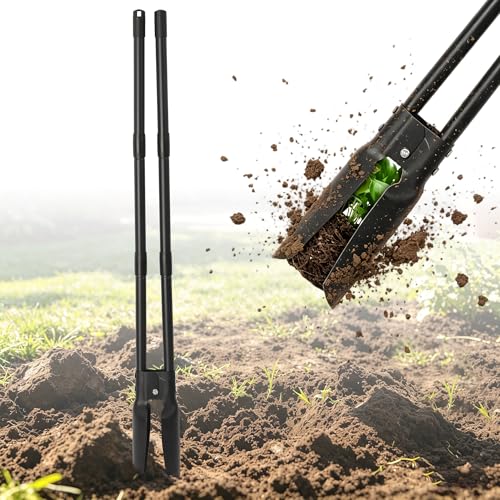
Best for: run-and-gun fence work where the tool rides in a truck bed between jobs Skip it if: you need a published weight before you buy
LLARGUEST puts this at 54 inches, which is the shortest full-size clamshell in the set, and pairs it with a sharp shovel head on screw-in connections. The maker describes the design as detachable, saying it is convenient to take outdoors in a car and store away. That is the pitch for anyone digging on rented land, on a client's site, or on the far side of a property where you drive rather than walk. The blade is described as heavy-duty metal suitable for harsh soil conditions, and the shaft length is called out as helping protect the lower back over long sessions. Set against the THANKSFINE at the top of the ranking, this one gives up 8 inches of reach and lists no weight, which is why it sits second rather than first. On a steep hill the shorter handles cost you stance, but the trade is real: this is the pick if the tool has to fit in a vehicle. The second-cheapest of the seven, and the only clamshell here that markets the take-apart design as a headline feature.
Pros:
- Detachable shaft for vehicle transport
- Screw-connection blade head
- Second-cheapest in this set
- Heavy-duty metal build claim
- Marketed for tough soil conditions
Cons:
- No published tool weight
- Shortest handle among the clamshells here
- Blade grade not named beyond "metal"
3. THANKSFINE Stainless Steel Handle — Most versatile
The same 62-inch frame as the winner, on a silver stainless steel handle, pitched at gardeners who use one tool for many jobs.

Best for: gardeners who plant, weed and dig posts with one tool Skip it if: you want a published weight or a fibreglass shaft
THANKSFINE lists the same 62 x 5 x 5 inch dimensions as the winner, but swaps the matte black shaft for stainless steel, and the marketing pitch is broader. The maker calls this a plant hole digger, weeder, bulb planter and mailbox installer as well as a fence post digger, and points out a built-in hanging hole at the top for garage storage. For someone whose ground includes a mix of light garden holes and the occasional fence post, that width of use is worth more than a spec sheet advantage. On a slope, the 57-inch handle reach carries over from the winner, and the high-carbon steel head is described as powering through dry, compacted soil. What sits this pick third rather than higher is the missing weight in the specification block: for a slope buyer that matters, because a heavier tool costs you on the fifth hole even if it feels fine on the first. Against the LLARGUEST, this one gives up the take-apart shaft but adds 8 inches of reach.
Pros:
- Longest reach in the set at 62 in overall
- Stainless steel handles resist rust
- Built-in hanging hole for storage
- Marketed for weeding and bulb planting too
- Third-cheapest of the seven
Cons:
- No published tool weight
- Steel handles heavier than fibreglass equivalents
- Only one seller lists it
4. YEELOR Integrated Carbon Steel Blade — Runner-up
A 55.1-inch clamshell built around a one-piece carbon steel blade and eight-bolt shaft connections.
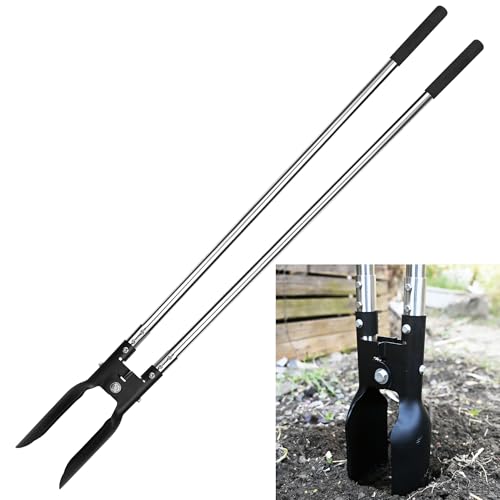
Best for: buyers who want a one-piece blade and adjustable-length handles Skip it if: you prefer a lighter, entry-priced tool
YEELOR builds this around what it calls an integrated blade, meaning the digging head is one piece of high-quality steel rather than a two-part assembly bolted at the tip. That is the strongest failure point on any clamshell, so a one-piece head is a real advantage on rocky slope work. The listed weight is 7.9 lb across a 55.1-inch overall length, which sits it between the two THANKSFINE picks in mass and just under them in reach. The maker also names an adjustable handle length, which helps a taller user set the tool up for a hillside where one hand is higher than the other. Eight-bolt shaft connections and what the listing calls precision turning thread joints are the assembly details YEELOR calls out. The trade-off against the winner is the mid price band and shorter reach, both of which cost the pick a place on the ranking. Against the CKG below it, YEELOR is lighter and cheaper, which is why it sits above.
Pros:
- One-piece steel blade head
- Adjustable handle length per listing
- 7.9 lb published weight
- Eight-bolt shaft connections
- Assembly tools included per maker
Cons:
- Mid-band price for entry-tier reach
- Handle material not named
- Requires assembly out of the box
5. CKG 57-Inch Fiberglass Handle — Best minimal setup
An 8 lb clamshell on fibreglass handles with a built-in depth gauge, for the buyer who wants a ready-to-swing tool.
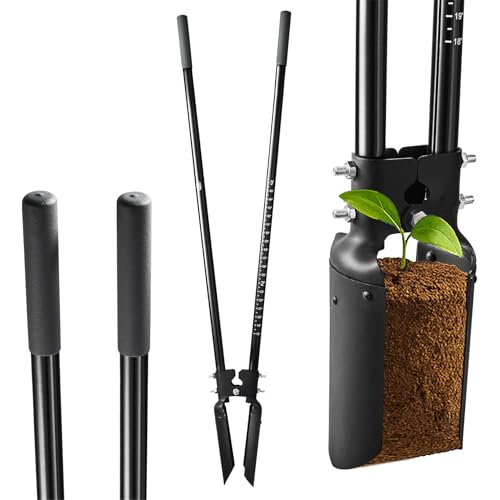
Best for: someone who wants a depth gauge and fibreglass handles ready to swing Skip it if: you dig only occasionally and do not want a premium price
CKG is the first fibreglass-handled pick in the ranking, and the difference on a slope is the twist you can put through the shaft when you tip a plug of soil out sideways. Fibreglass gives the shaft a controlled flex that steel does not. The listing states an 8 lb tool weight and calls out a built-in roulette depth gauge on the blade, so you can hit a consistent hole depth along a fence line without measuring every hole. The maker describes soft foam anti-slip grips as well, which help on a wet handle. Set against the YEELOR just above, this one loses on price band and gains on handle material and depth gauge. Against the VEVOR at the top of the premium picks, it undercuts on weight by 2.1 lb. The reason it lands mid-pack rather than higher is the premium price without the reach of the winner or the transport story of the LLARGUEST. Two sellers list it, more than any other pick here.
Pros:
- Fibreglass handles for controlled shaft flex
- Built-in depth gauge on blade
- Anti-slip foam grips
- 8 lb published weight
- Two sellers list it
Cons:
- Premium price band
- No published overall length
- Not the lightest fibreglass option here
6. Oscorna 8-Inch Hand Drill Auger — Best upgrade
A T-handle screw-in auger with an 8-inch bit, for slope holes in soft soil where a clamshell cannot get clearance.
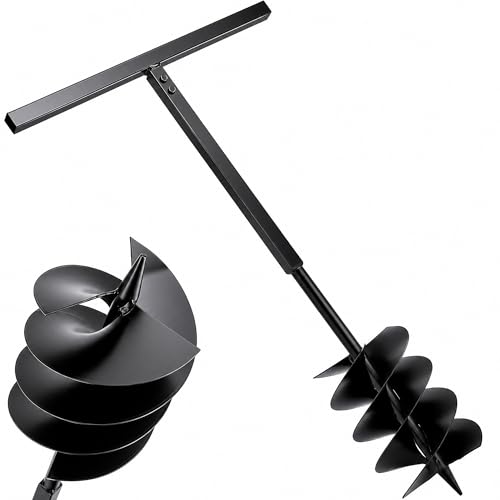
Best for: soft-soil holes on a slope, where a T-handle auger beats a clamshell Skip it if: your ground has rocks or heavy clay
This is the only non-clamshell in the roundup, and it earns its place because a clamshell has a real weakness on steep ground: the downhill handle needs air to swing into, and a bank often takes that air away. An auger works differently. Oscorna lists a 44.5-inch total height with an 8-inch T-handle top and an 8-inch spiral bit, so you stand over the mark and turn rather than lever. The maker says it works efficiently in soft soil, sand and lawn, which is the honest limit of the tool: rocks and heavy clay will stop it. The build is described as high-quality steel with a powder coating and a non-slip grip. Against every other pick on this list, this one asks less of your back on a slope but more of your soil. It sits at the premium price band, which is why it does not rise higher despite the slope advantage. If your hillside is topsoil, it is the pick. If it is not, look higher up the ranking.
Pros:
- T-handle stance ideal on tight slopes
- No handle clearance needed either side
- 8-inch bit diameter
- Powder-coated steel per listing
- Marketed for lawn, sand and soft soil
Cons:
- Limited to soft soil per maker's own claim
- Shortest tool in the set at 44.5 in
- Premium price band
7. VEVOR 57.5-Inch Fiberglass — Best premium
A 10.1 lb, 57.5-inch clamshell with fibreglass handles, a 50Mn steel blade and a 5.71-inch published hole diameter.

Best for: long fence runs where fibreglass handles and a 5.71-inch hole diameter earn the price Skip it if: you want the lightest tool in the set
VEVOR is the most specified digger in the roundup: a 57.48-inch handle length, a 0.12-inch fibreglass shaft thickness, a 50Mn steel blade and a 5.71-inch hole diameter, all called out in the listing. That is the profile of a tool aimed at a fence contractor rather than a weekend gardener. The maker also says it ships assembled and ready to use, which matters when you have a run of ten posts to dig before dark. What holds it at the bottom of the ranking for slope work is the 10.1 lb tool weight, the heaviest in the set. On level ground that weight adds bite. On a hill it adds fatigue, and past the fifth or sixth hole it changes the arithmetic. Against the CKG, VEVOR gives up 2.1 lb but adds published length, blade grade and hole diameter, so if you want the numbers on the label this is the pick. Against the winner it is 2.6 lb heavier at similar reach, which is the concrete cost of a fibreglass shaft and named blade steel.
Pros:
- 50Mn steel blade named by maker
- Fibreglass handle at 0.12 in wall thickness
- Published 5.71 in hole diameter
- No assembly per listing
- Most specified pick in the set
Cons:
- Heaviest tool here at 10.1 lb
- Premium price band
- Only one seller lists it
Clamshell or auger: which suits a slope?
Clamshells win on hard ground and lose on tight footprints. Augers win on soft ground and lose on rocks. On a steep hill you have to guess which one your soil is closer to before you buy.
Rules of thumb from the specs in this set:
- If you can push a spade in to its shoulder without hopping on it, an auger like the Oscorna will work.
- If you cannot, or if the ground rings when you tap it, use a clamshell.
- If the slope is steep enough that you cannot swing a 5-foot handle sideways, an auger's vertical turning motion is the only tool that fits.
- If the slope is only moderate and the soil is stony, the winner's 7.5 lb weight and 62-inch reach on carbon steel blades is the safer buy.
The best manual post hole digger for steep hills for most buyers will be a clamshell, because most fence-line dirt is heavier than a hand auger can bite. But the Oscorna's place in this roundup is real. On a wooded bank where a clamshell cannot open, a screw-in bit is the tool that finishes the hole.
What the listings do not tell you about hillside digging
Every listing here talks about the tool. None of them talks about the hole. On a slope, the hole itself behaves differently.
Water drains through it faster, so post concrete sets differently and needs mixing wetter than the bag suggests. The uphill side of the hole caves in first, especially in sandy soils, so you often dig deeper than plumb to keep the top of the hole square. And the tool marks matter: a clamshell leaves a straight-sided hole, while an auger leaves a screw-shaped one that a post concrete pour will fill unevenly.
None of this is on any product page. What you can pull from the listings is the reach and weight that let you keep working when the ground fights back. The best manual post hole digger for steep hills is the one whose reach lets you stand upright and whose weight does not tax your shoulder past the fifth hole.
Handle length in this set:
- 62 in overall: THANKSFINE 57-Inch, THANKSFINE Stainless Steel Handle
- 57.5 in: VEVOR
- 57 in handle length: CKG
- 55.1 in: YEELOR
- 54 in: LLARGUEST
- 44.5 in total height: Oscorna auger
How to judge a post hole digger you did not see here
Seven picks is a sample, not the whole market. When you look at a manual post hole digger elsewhere, run the same filters I used above.
- Look for a named blade grade. Carbon steel and 50Mn steel are honest answers. "Metal" is not.
- Look for a stated handle length, in inches. A listing that only gives you a box dimension is hiding the number you need.
- Look for a stated weight. A missing weight on a slope pick is a real gap, because it decides how long your day lasts.
- Look for a handle material. Fibreglass on the CKG and VEVOR picks is what you compare a wooden shaft against.
- Look for a clamshell versus auger call. On a slope, that is not a style preference, it is a soil question.
A listing that answers all five is a listing that trusts its own numbers. A listing that answers only two or three is one you have to guess about, and guessing is exactly what a hillside punishes.
The verdict
If you are digging on a slope and you want a clamshell, the THANKSFINE 57-Inch Manual Fence Digger is the pick. It gives you the longest reach in the roundup at 62 inches overall, the lowest weight for a full-size digger at 7.5 lb, carbon steel blades named on the listing, and the cheapest price position of the seven. On a hill, reach and weight decide the day, and this one wins both.
If you are digging on a slope and you want an auger, the Oscorna 8-Inch Hand Drill Auger is the pick, but only if your soil is soft enough for a screw-in bit to cut. It solves the one real problem a clamshell has on steep ground, which is that the downhill handle needs air to swing into. In topsoil, sand or lawn, it wins. In clay or gravel, it will not turn, and you go back to the clamshell.
The runner-up is the LLARGUEST 54-Inch Heavy Duty, because a detachable shaft turns the tool into something that fits in a vehicle. If you dig on land you drive to, that beats a longer handle you cannot pack.
FAQ
Is the best manual post hole digger for steep hills a clamshell or an auger?
The best manual post hole digger for steep hills is usually a clamshell, because most slope soil is heavier than a hand auger can bite. On a wooded or sandy bank where a clamshell cannot open sideways, a screw-in auger like the Oscorna 8-inch is the tool that finishes the hole. Match the tool to your soil first and your slope second.
Is a manual post hole digger worth it on a hill, or should I rent power?
A manual digger is worth it for runs under about ten holes, or when the slope is too steep to walk a powered auger onto safely. The seven picks here weigh between 7.5 lb and 10.1 lb, so you carry them up the hill yourself, one hand free. A gas auger needs two people on a bank. For a whole property fence, rent power. For a garden gate, swing manual.
How long a handle do I need for slope work?
Handle length in this roundup runs from 54 inches on the LLARGUEST to 62 inches on both THANKSFINE picks. On a hill, longer is better up to the point that the tool becomes hard to control, because the uphill hand sits well above the downhill hand and reach absorbs the height difference. Aim for 57 inches or more if your slope is meaningful.
THANKSFINE 57-Inch versus VEVOR 57.5-Inch: which for a rocky bank?
For a rocky bank the VEVOR wins on paper: a named 50Mn steel blade, a 0.12-inch fibreglass handle wall and a published 5.71-inch hole diameter. The THANKSFINE 57-Inch answers with carbon steel blades and a 2.6 lb lighter tool weight. On rocks, VEVOR's blade grade earns its price. On a long day, the THANKSFINE's weight earns yours.
What is the pitfall most first-time buyers hit with a post hole digger?
The pitfall most first-time buyers hit is buying on price band alone and finding a tool with a soft, unspecified blade. On a hill that shows up on the third hole, when the head deforms against a rock and the digger stops closing cleanly. Look for a named blade grade, carbon steel or 50Mn steel, before you look at anything else on the listing.
The next step is honest: measure your slope with a level app on your phone, dig one test hole with a spade to see what your soil actually is, and only then pick between the clamshell and auger routes in this roundup. If the ground is heavy and the slope is real, the THANKSFINE 57-Inch is the manual post hole digger that gives you the most reach for the least weight, on a named carbon steel blade, at the lowest price position in the set. It is not the fanciest pick here. It is the one whose numbers line up with the job a steep hill actually asks of a digger, which is to stay light in your hands from the first hole to the last.